

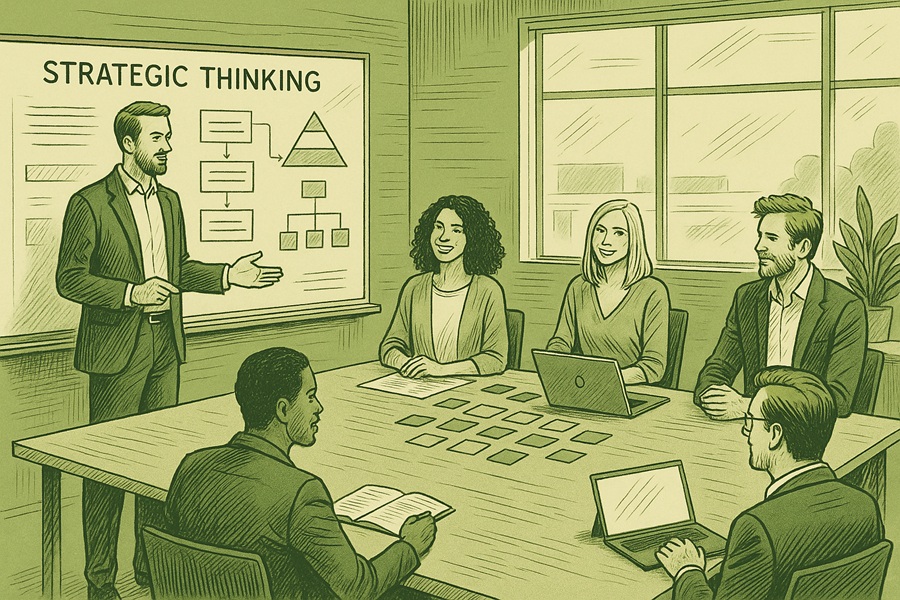
Why Structured Workshops Improve Strategic Thinking
Key Takeaways:
- Strategic thinking is often messy without the right structure—workshops help teams focus.
- Facilitated workshops provide a neutral space for aligning priorities and clarifying direction.
- Effective strategy workshops balance open discussion with outcome-driven design.
- Bringing in an external facilitator can help uncover insights and foster commitment to action.
When it comes to strategy, clarity is everything—but getting there isn’t always easy.
Teams often have the ideas, insights, and ambition to think strategically, but what’s missing is the structure. Strategy workshops, when designed well, create the right conditions for focused, collaborative thinking that turns ideas into action.
In this post, we’ll explore why structured workshops are essential for strategic alignment, how to design them for impact, and why bringing in a facilitator can elevate the process.
Why Strategic Thinking Needs a Clear Framework
Strategy isn’t just about long-term plans or vision statements—it’s about making choices. And to make smart choices, teams need space to step back from day-to-day pressures and think more deliberately.
But too often, strategy sessions become unfocused:
- Conversations drift.
- Dominant voices take over.
- Key issues remain unspoken.
This is where structured facilitation makes a difference. By shaping the flow of discussion and providing the right tools for analysis and prioritisation, a well-run strategy workshop helps teams focus on what matters most.
The Role of Workshops in Strategic Alignment
Workshops offer a unique opportunity to bring teams together in a way that typical meetings can’t. They create a neutral, participatory environment where:
- Everyone has a voice.
- Shared understanding is built.
- Decisions are made with clarity.
By combining preparation, facilitation, and follow-up, workshops can move a team from divergent thinking (exploring possibilities) to convergence (agreeing on priorities).
Typical Outcomes from a Strategic Workshop:
- Clear goals and priorities.
- Shared understanding of current challenges.
- Defined next steps with ownership.
Designing a Strategy Workshop That Works
Not all workshops are created equal. The best ones balance freedom to explore with structure to decide.
Key Elements of a Successful Strategy Workshop:
- Framing the Purpose
Why are you here? What decisions need to be made? - Diverse Input
Include different perspectives—but in a way that keeps focus. - Clear Facilitation Tools
Use formats like SWOT, prioritisation grids, or journey mapping—whatever helps make thinking visible. - Time for Reflection and Decision
Space to think deeply, and then commit to action.
Why Bring in an External Facilitator?
It’s hard to think and facilitate at the same time. An external facilitator:
- Keeps the process on track.
- Encourages balanced participation.
- Brings fresh perspectives and tools.
More importantly, they help create the space where your team can do their best thinking—without getting bogged down in logistics or power dynamics.
Final Thoughts: Strategy Is a Team Sport
Strategic thinking doesn’t happen in isolation. It’s a team effort, and like any team, you perform best when you’ve got the right structure, support, and space to work together.
If you’re planning a strategy session or away day and want to make it count, I’d love to help. Let’s create the conditions for your team’s best thinking.